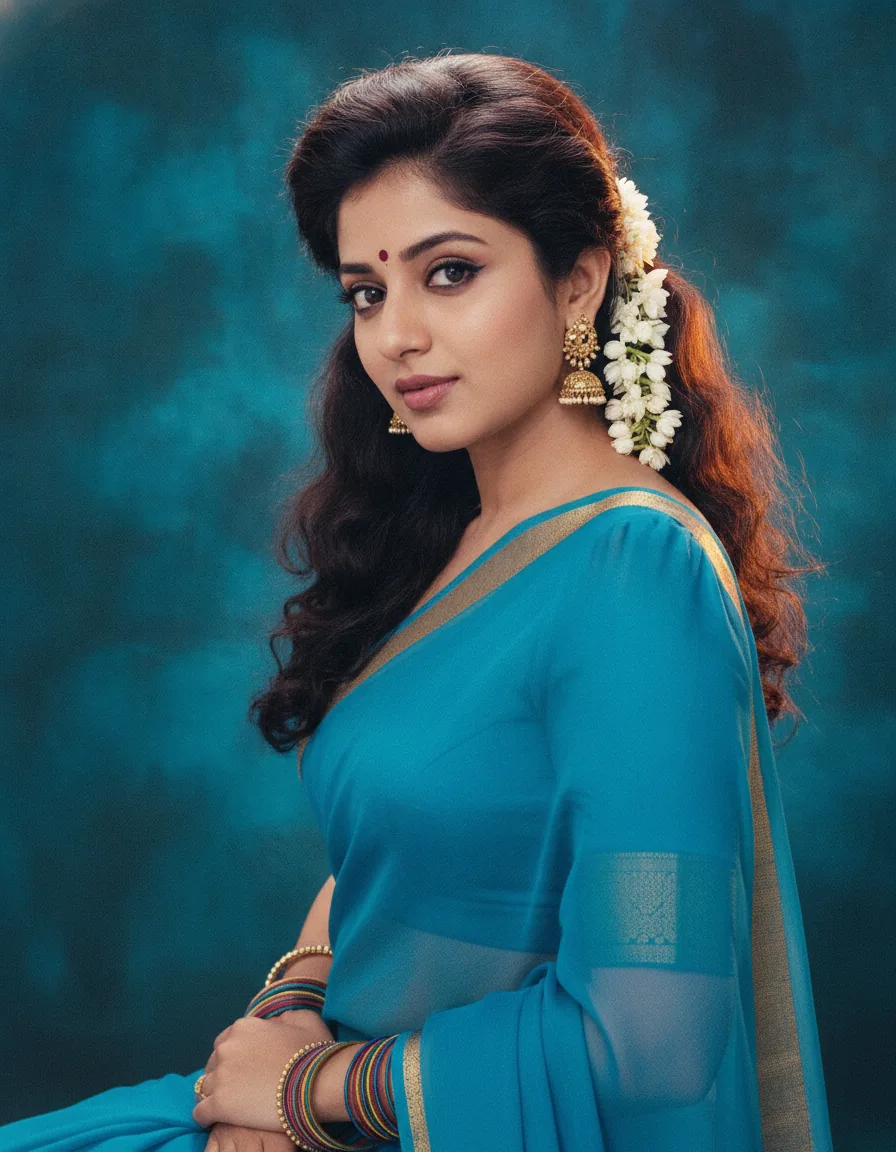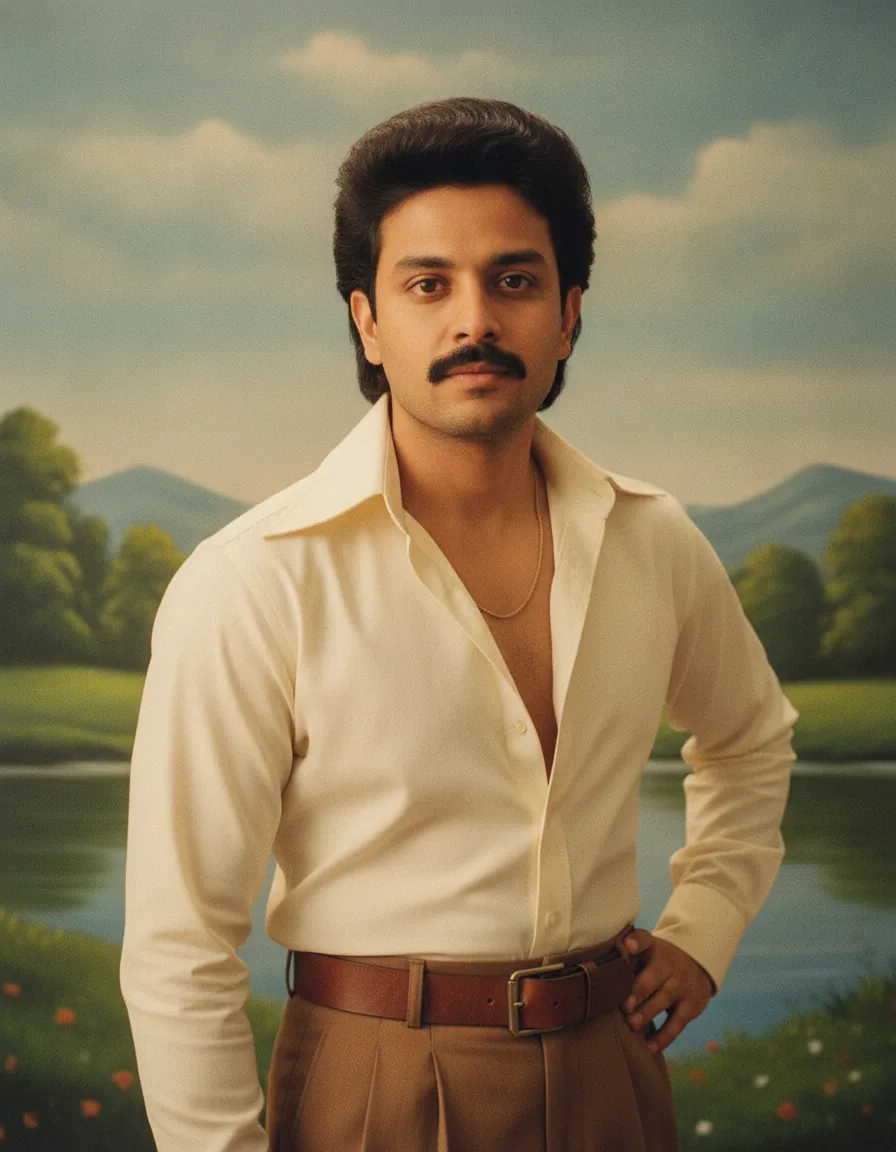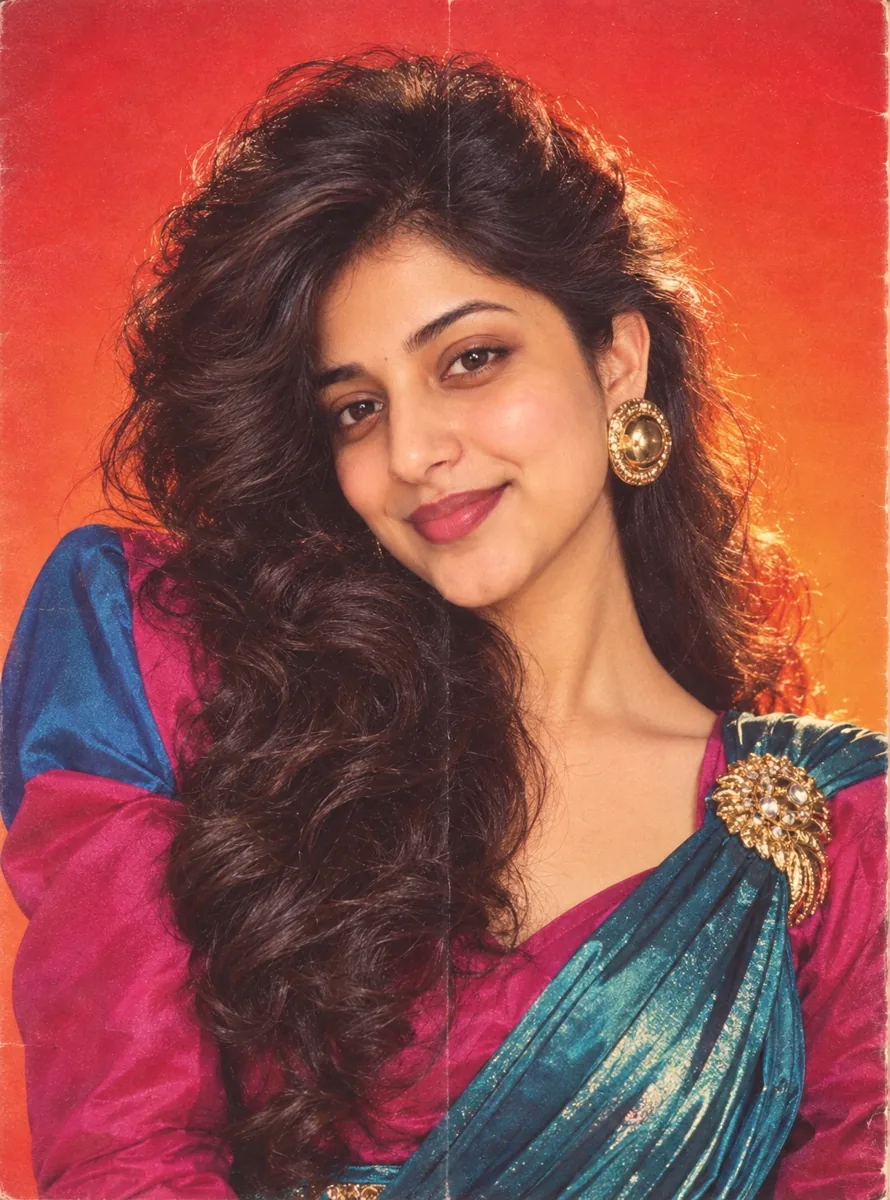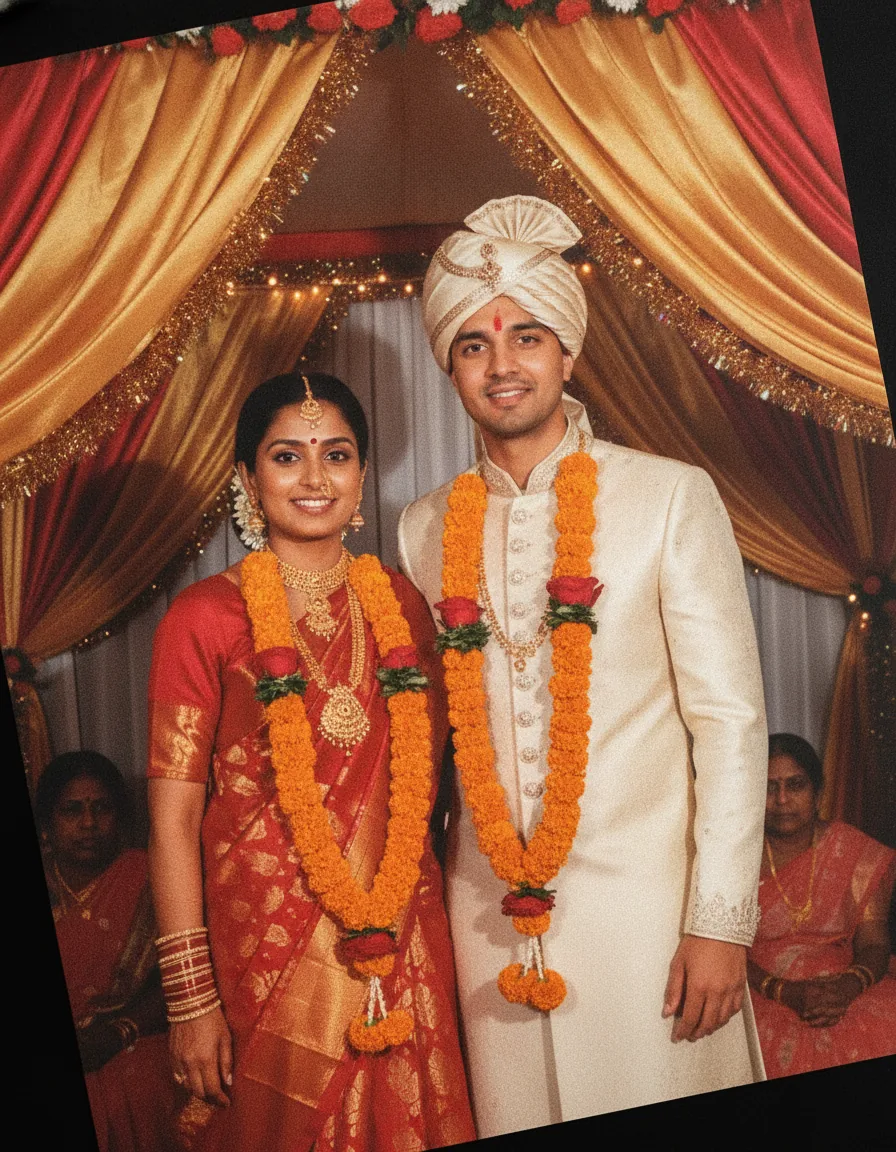
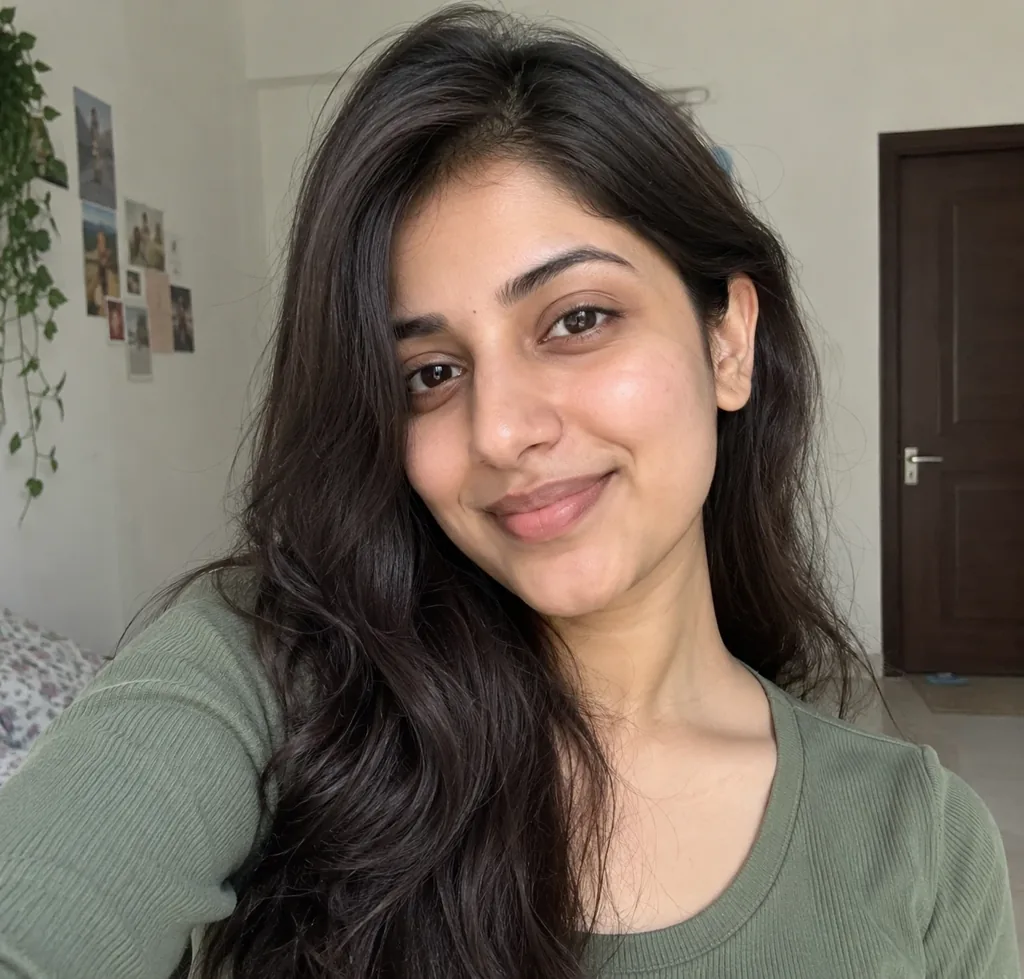
 Before
What this prompt creates
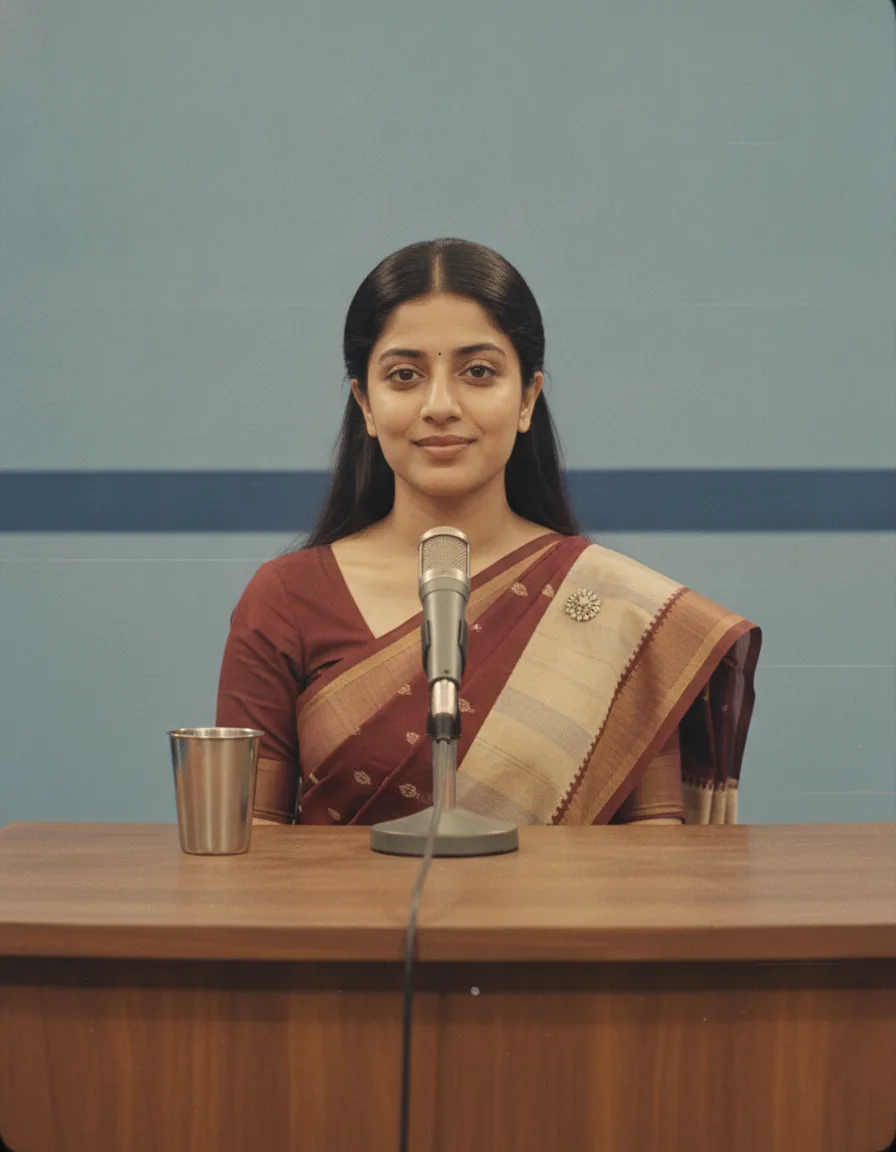
You appear seated behind a simple wooden desk with a microphone and a steel glass, dressed in a starched handloom saree with a brooch or a safari suit with a pen in the pocket. The background is a plain powder-blue flat with one painted stripe. The image looks like a paused video frame, soft and a little washed out, with faint horizontal lines, edges where colours spill and a warm yellow tint.
How to use this 1980s doordarshan photo prompt
- Tap Copy prompt above to copy the full text.
- Open ChatGPT or Gemini and start a new chat. Upload a clear, well-lit photo where your face is fully visible (no sunglasses or heavy filters); for couple or family prompts, upload a photo with everyone in it.
- Paste the prompt and send it. Change the outfit, desk props and backdrop colour to suit whether you want to be the newsreader, the interview guest or the quiz host.
- If the face changes, reply “keep my face exactly as in the uploaded photo” and regenerate. Try two or three versions and keep the one that looks most like a real old print.
Tips for this prompt
- Upload a straight-on, shoulders-up photo with a neutral expression; newsreader framing is very frontal, so side-angle selfies tend to cause face changes.
- If the scan lines look too heavy or glitchy, reply "make the video texture subtle, like a clean recording" and keep everything else the same.
- Turn it into a quiz show or farmers' programme by swapping the desk for a panel table and adding a potted plant and a simple chalkboard.
Who this prompt suits
People who grew up with one TV channel, or anyone wanting a gently comic retro portrait for Instagram, a LinkedIn joke post, or a family group chat throwback.
What makes this prompt work
"Do not smooth, slim or beautify me" keeps your real face under the studio glare. Props such as "single grey microphone on a stand and a steel water glass" make the set read as a modest state broadcaster. The capture line "frame grabbed from broadcast video: soft focus, faint scan lines, colour bleeding" gives the tube-screen texture instead of film grain, and "no logos, captions" avoids invented channel graphics.