What this prompt creates
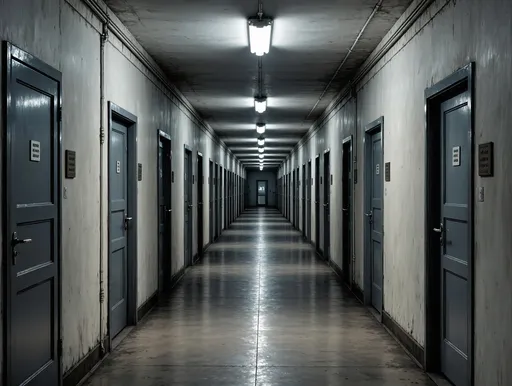
The result is a near-photographic view straight down a long, narrow institutional hallway. Slate-grey panelled doors with small nameplates line both walls, and a row of bare fluorescent fixtures recedes toward a vanishing point. Light pools on a glossy, worn floor while the stained plaster walls fall into shadow. The palette is almost monochrome, cold grey-blue with no decoration, and the symmetrical framing makes the space feel endless and airless.
How to use this 1980s soviet police corridor prompt
- Tap Copy prompt above to copy the full text.
- Open Kling, or any image generator you prefer, and paste the prompt into a new chat or prompt box.
- Swap 'Soviet police station' for a hospital ward, school basement or factory office block and keep the fluorescent, desaturated hallway treatment.
- Generate three or four versions and keep the one with the most convincing grain, color and light. Use the tips below if the result looks too modern.
Tips for this prompt
- Add a lone figure in a militia uniform walking away at the far end to give scale and a narrative hook to the empty hallway.
- Mention Cyrillic door plaques, a wall-mounted rotary phone or a faded portrait of Lenin to anchor the setting more firmly in the Soviet 1980s.
- For a true film look, replace the graphic novel wording with 'shot on ORWO film, slight grain, greenish fluorescent cast' and drop the high contrast request.
Who this prompt suits
Ideal for Cold War thriller pitch decks, true-crime podcast artwork, tabletop RPG scene cards and anyone building a moodboard for a grim Eastern Bloc period drama or dystopian short film.
What makes this prompt work
Short declarative lines do the heavy lifting. "Cold fluorescent lights repeating along the ceiling" creates the rhythm of the shot, while "identical and anonymous" doors give the symmetry its dread. "No windows, no decoration" strips out anything cheerful, and "cold and desaturated color palette, high contrast shadows" handles the grade. Note that although the prompt asks for a "graphic novel style", this model delivered something much closer to a real photograph, which suits the era even better.
Example image by Gianluca Caputo, shared publicly on OpenArt. The prompt is shown as originally posted.